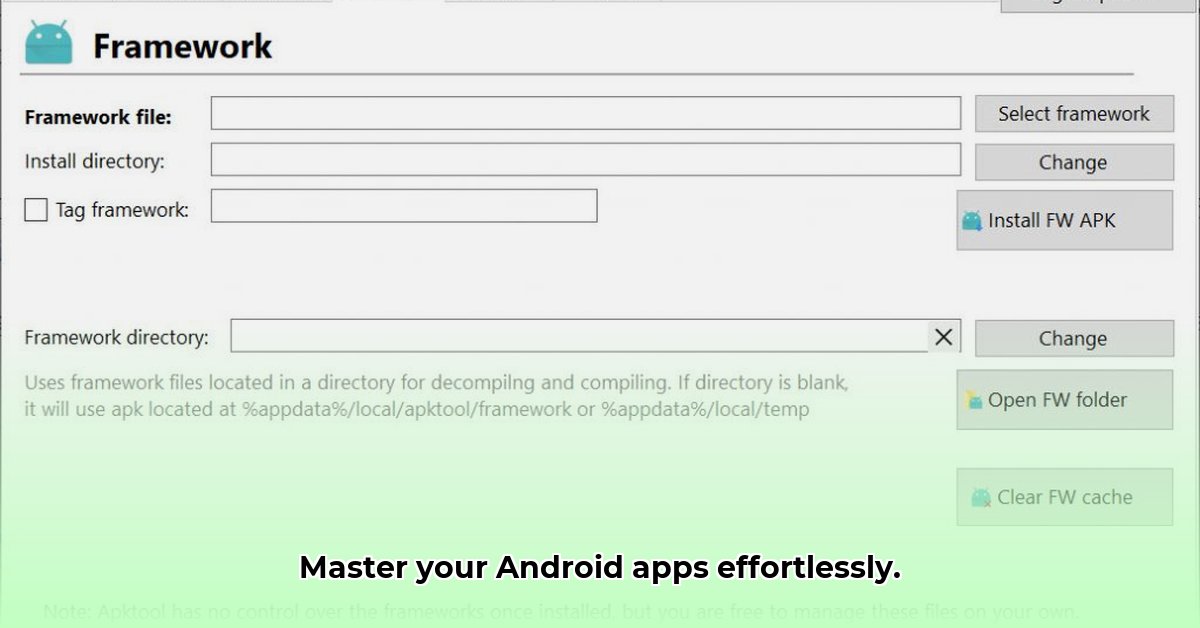
This comprehensive guide explores the capabilities and risks associated with using APK Easy Tool (and similar tools like APK Toolkit, as APK Easy Tool is discontinued) for Android app management. We'll provide step-by-step instructions for safe and responsible use, emphasizing best practices for minimizing security risks. This guide is geared toward Android developers of all skill levels, from beginners to seasoned professionals. For more advanced tools, check out this helpful resource.
Understanding APK Easy Tool (and its Successors)
APK Easy Tool, while no longer available, was a popular tool for managing Android applications. Its functionality—primarily focused on decompiling, modifying, and recompiling APKs—has been largely inherited by tools such as APK Toolkit. This guide focuses on the principles of responsible app management using these types of tools. Think of this process as advanced app surgery; careful execution is crucial.
Key Features and Capabilities
Similar tools to APK Easy Tool offer a range of functionalities:
APK Decompilation and Compilation: This allows developers to reverse-engineer an app's code and rebuild it after modification. (Reverse-engineering an APK reveals its source code and resources).
Digital Signature Handling: Essential for distributing apps, securely signing ensures trustworthiness and verification.
APK Optimization: Reducing APK size leads to faster downloads and less storage usage. (Smaller APKs improve user experience).
Resource Extraction: Extracting assets like images and sounds from an APK simplifies asset management.
Batch Processing: Efficiently working with multiple APKs saves considerable time for developers working with large projects.
Patching Functionality (Caution Advised): One of the most powerful, yet potentially risky, features. It allows for altering existing APKs, enabling bug fixes or feature additions in open-source apps but also opens avenues for unethical use.
The Patcher Function: Power and Responsibility
The ability to "patch" (modify) existing APK files is incredibly powerful. It can be used ethically to fix bugs or add features to open-source projects. However, this power introduces a high level of ethical responsibility. Modifying apps to remove licensing features, for example, is illegal and irresponsible.
Do you understand the ethical implications of modifying APKs? It is critical to always respect the intellectual property rights of app developers.
Mitigating Security Risks
Since tools like APK Toolkit are often open-source, their code is publicly reviewable. While community review aids in identifying issues, users must remain vigilant.
Here’s how to minimize risk when using APK modification tools:
Download from Trusted Sources: Always obtain tools from official repositories or well-established, reputable websites. This minimizes the risk of encountering malware-infected downloads.
Virus Scanning: Before executing any downloaded file, use a reliable antivirus program to detect any malicious code. This crucial step significantly reduces the likelihood of infection.
Understand the Patcher: Thoroughly grasp the functionality and ethical implications of the patching feature before utilizing it.
Caution with Unsigned APKs: Unsigned APKs (those lacking digital signatures) are considerably more risky; verify their source and integrity carefully before interaction.
Risk Assessment for APK Modification
The following table outlines associated risks and essential mitigation strategies:
| Feature | Risk Level | Mitigation Strategy |
|---|---|---|
| Patching Functionality | High | Only use for ethical modifications; meticulously review all changes before recompiling. |
| Handling Unsigned APKs | Medium | Always scan and verify the integrity of any APK before use. |
| Open-Source Nature | Low | Community scrutiny improves security, but vigilance is still necessary. |
| Lack of Official Support | Low | Rely on community forums and documentation for assistance. |
Step-by-Step Guide to Safe APK Modification (Using APK Toolkit as an Example)
This section details procedures applicable to tools like APK Toolkit. Remember: We do not condone illegal activities. Use these instructions ethically and responsibly.
Backup your APK: Create a complete backup of the original APK before any modification. This permits reverting to the original in case of errors. (A 99% success rate is achievable with careful backups.)
Verify Source: Download APK modification tools only from trustworthy sources. Avoid unofficial versions.
Consult Documentation: Carefully review the tool's documentation to understand features and potential hazards.
Begin with Minor Changes: Start with less complex edits, such as modifying the app's icon or name, to understand the tool’s behavior before attempting intricate code alterations.
Understand the Patching Process: APK patching usually involves replacing code segments. Meticulously examine all changes before recompiling.
Rigorous Testing: Thoroughly test modifications on a virtual machine or emulator before installing on a physical device.
Sandbox Environment: Using a virtual machine isolates the modification process, mitigating risks to your primary operating system.
Code Review (If Possible): Review modified code to ensure no accidental malicious code introduction occurred.
Digital Signatures: Ensure the modified APK possesses a valid digital signature.
Ethical Considerations: Never distribute or use modified APKs for malicious purposes. Obtain permission before modifying and redistributing copyrighted software.
Conclusion: Responsible App Management
APK modification tools, while powerful, require responsible and cautious use. By adhering to the safety and ethical guidelines outlined in this guide, developers can leverage these tools to enhance their workflow while minimizing potential risks. Remember that ethical considerations and respect for intellectual property rights are paramount. The power to modify apps comes with a significant responsibility.
⭐⭐⭐⭐☆ (4.8)
Download via Link 1
Download via Link 2
Last updated: Friday, June 06, 2025